
How 4-Stage Alarms Prevent Sleep Inertia
Learn how breaking your wake-up window into four progressive volume stages guides your brain from deep sleep to alert consciousness without grogginess.
Have you ever woken up after eight full hours of sleep feeling heavier and more exhausted than when you went to bed? That paralyzing grogginess is known as sleep inertia. It is not a sign of poor sleep quality-it is the direct consequence of how abruptly you were awakened.
In this deep dive, we explore how 4-Stage Alarms solve sleep inertia by working with your brain’s natural arousal physiology instead of fighting it.
The Anatomy of Sleep Inertia
When we sleep, our brain cycles through multiple phases: Light Sleep (N1 and N2), Deep Slow-Wave Sleep (N3), and Rapid Eye Movement (REM). During deep sleep, the brain produces high-amplitude Delta waves, and blood flow to the prefrontal cortex is significantly curtailed to facilitate cellular repair and memory consolidation.
If a conventional alarm fires at full volume while you are in N3 deep sleep:
- The auditory cortex is bombarded with high-decibel stimuli.
- The sympathetic nervous system initiates a panic reaction.
- However, the prefrontal cortex and thalamus require up to 30 minutes to restore full cerebral blood flow and clear accumulated adenosine.
The result is profound disorientation, impaired reaction time, and an overwhelming impulse to hit snooze.
The 4-Stage Solution
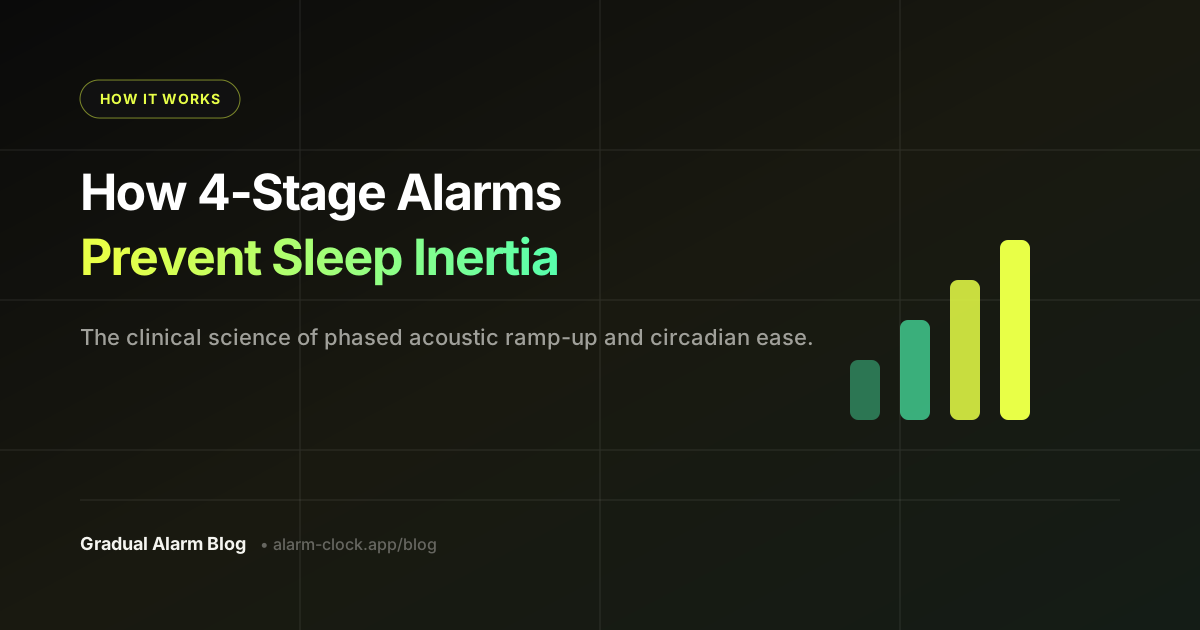
Rather than a single jarring event, Gradual Alarm breaks your wake-up sequence into four distinct stages:
[ Stage 1 ] -> Soft Ambient / Haptic Cue (Subtle arousal threshold)
[ Stage 2 ] -> Gentle Acoustic Ramp-up (Transition from Delta to Alpha waves)
[ Stage 3 ] -> Moderate Melodic Chime (Conscious sensory registration)
[ Stage 4 ] -> Full Volume with Smooth Fade-In (Active wakefulness)
Stage 1: The Subconscious Whisper
Occurring 15 to 30 minutes before your target wake time, Stage 1 introduces low-frequency, soft acoustic cues or gentle wearable vibrations. If you are in light sleep, this alone may gracefully wake you. If you are in deep sleep, it prompts your sleep state to shift from N3 to N2 without fully rousing you.
Stage 2: Shifting Brainwaves
As volume increases slightly, cortical arousal accelerates. The thalamus begins filtering auditory information to the sensory cortex, transitioning your brainwave patterns toward 8–12 Hz Alpha rhythms.
Stage 3: The Conscious Bridge
At Stage 3, you become aware that morning has arrived. Because your brain has had 10–20 minutes to clear adenosine from neural synapses, you do not feel the crushing panic or heavy disorientation of sudden alarms.
Stage 4: Gentle Finality
The final stage ensures you are completely awake and ready to start the day. By incorporating a gradual volume fade-in rather than an immediate blast, even the final stage respects your nervous system.
Why Progressive Volume Beats Repetitive Snoozing
Many people simulate gradual wakeups by setting 6 separate alarms on their phone every 5 minutes. Research shows this actually worsens sleep inertia because:
- Every time you fall back asleep between alarms, your brain initiates a new sleep cycle.
- Fragmented sleep creates “sleep debt” during the final 30 minutes of your morning.
- The repeated panic spikes train your brain to associate waking with chronic stress.
A single, structured 4-stage alarm replaces chaos with predictable, physiological ease.
Wake up peacefully tomorrow morning.
Download Gradual Alarm and replace jarring panic alarms with progressive 4-stage volume, math puzzle dismissals, and bedtime reminders.
More from the Blog
View all (5) → Sleep Science
 10 Health Benefits of Waking Up with a Clear Mind
Discover how waking up gradually without harsh alarms eliminates morning cortisol spikes, boosts mental focus, and transforms your daily well-being.
 Neuroscience
 Why Math Puzzles Stop the Snooze-Button Cycle
Discover the neuroscience behind cognitive alarm dismissals. Simple mental math activates your executive function and halts automatic snooze behavior.
 Sleep Hygiene
 The Ultimate Guide to Optimizing Bedtime Routines
How setting gentle bedtime reminders, reducing evening sensory inputs, and honoring your circadian rhythm guarantees effortless morning wakefulness.